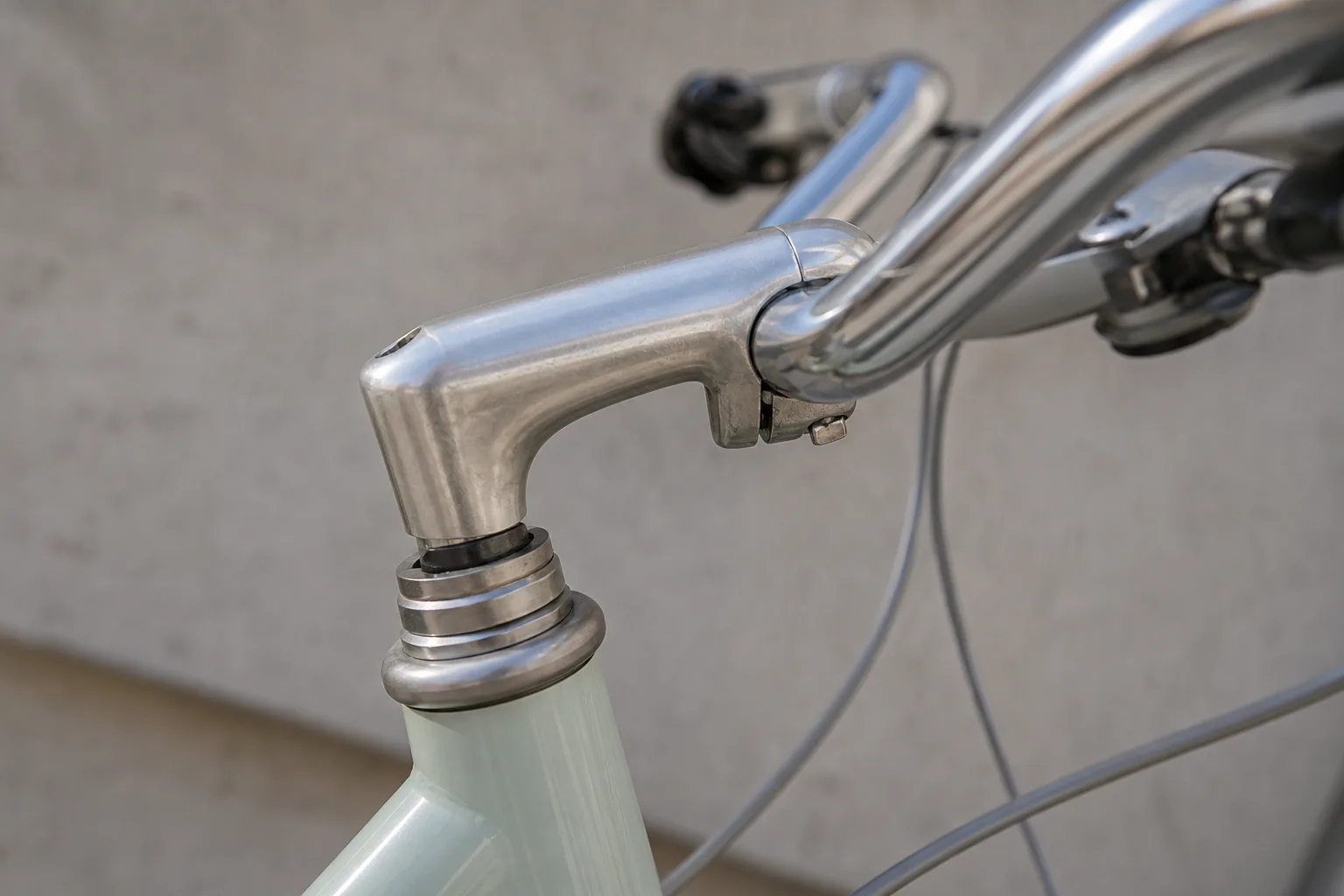
How saddle height, stem length and bar rise interact on an upright frame, and how to tell a reach problem from a weight problem before spending money on a replacement.
A back that stiffens after twenty minutes of leaning forward does not need a different category of bicycle so much as a different set of three measurements, and most riders can change two of them on the bike already in the garage. The three are saddle height, the reach out to the grips, and how high those grips sit relative to the saddle. They interact. Raise one and the others change character, which is why a single adjustment often disappoints and a coordinated pair of them fixes the whole complaint at once.
Saddle height first, because everything else is measured from it
Set the saddle so the leg is nearly straight at the bottom of the pedal stroke with a slight bend left at the knee, then check that the hips stay level rather than rocking side to side. A saddle set too low forces the rider to compensate by tipping the pelvis and rounding the lower back, which reads as a back problem and is really a leg-extension problem. A saddle set too high does the same thing from the other direction. Get this right before touching the handlebar, because every reach measurement you take afterward depends on where the sit bones actually land.
Reach and rise are two different fixes for two different complaints
Reach is the horizontal distance from saddle to grips, governed mostly by stem length, the short piece of tubing clamping the handlebar to the steerer. Rise is the vertical difference, governed by stem angle, spacers under the stem, and the shape of the bar itself. A rider whose lower back aches and whose neck tires is usually reaching too far forward, and a shorter stem, an inch or two, brings the bar back without changing anything else. A rider whose back is fine but whose hands go numb is usually carrying too much upper-body weight on the grips, and that wants height, not proximity.
The comparison matters because the two remedies pull against each other in practice. Swapping to a tall riser bar shortens reach as a side effect, which can leave a rider with knees close to hands and steering that feels twitchy at walking speed. Fitting a very short stem raises the grips slightly but mostly changes handling, making the front end quicker than it was. On a frame designed to be ridden upright, the better sequence is to solve the vertical distance first with spacers or an adjustable-angle stem, ride it for a week of real errands, then decide whether reach still needs shortening.
Numb hands, and what they are actually telling you
Numbness that arrives in the ring and little fingers, and clears within a minute of shaking the hand out, generally comes from pressure on the outer edge of the palm, which means weight, angle, or grip shape. Numbness in the thumb and index finger tends to come from a wrist bent too far back, which is an angle problem you can often fix by rotating the handlebar in the stem clamp a few degrees. Neither one is solved by a softer saddle. The careful check is simple: ride a block with the hands resting so lightly on the grips that you could lift them, and if that is impossible without falling forward, the bar is too low or too far away.
The Consumer Product Safety Commission oversees the safety requirements bicycles must meet before they are sold new in the United States, and that framework covers assembly and component security rather than fit, which stays a matter for the rider and whoever sets the bike up. Torque matters here. Stem bolts and seatpost clamps have recommended values printed near the bolt head on most modern parts, and a small torque wrench is a cheaper purchase than a new bicycle.
When adjustment stops and replacement starts
There is a point past which the existing frame will not cooperate, and it is worth naming clearly. If the stem is already as short as the steering tolerates, the bar is already tall, the saddle is forward on its rails, and the rider still cannot sit upright without perching, the frame's top tube is simply long for that body. That is a geometry answer, not a parts answer. Before concluding it, though, check the saddle's fore-aft position and its tilt, because a nose pointed down slides the rider forward onto the hands and mimics every symptom of excess reach.
Work in one change at a time, write down where things started, and ride the same errand loop after each adjustment rather than a special test ride. The route you actually use tells you more in fifteen minutes than an hour on unfamiliar roads, and most of what a stiff back needs turns out to be an inch of bar height and a stem an inch shorter.